Build A Useful Door Asset Register
Industrial door maintenance starts with knowing what is installed and who is responsible for it. A site may have several shutter types, overhead doors and loading bay assets added at different times. We help facilities managers and landlords organise those assets into a workable inspection and maintenance plan.
Record a unique reference, location, door type, manufacturer details where available and normal operating pattern for each asset. Add known defects, previous repairs and the location of instructions. This makes it easier to distinguish repeat faults from unrelated problems on similar doors.
The register should also identify where a door interacts with other equipment. A loading bay door may share controls with a dock leveller, while an internal high-speed door may use access-control or process interlocks. Those relationships need to be understood before testing or adjusting controls.
Set The Interval From Use And Risk
There is no single maintenance interval that suits every industrial door. Manufacturer guidance, opening frequency, environment, age and impact exposure should shape the schedule. A busy dispatch shutter may need a different approach from a rarely used store door on the same premises.
Regular operator checks complement specialist servicing. Site staff can be instructed to report unusual noise, visible damage, loose components and unreliable operation without attempting repairs. The permitted checks must be explained clearly, including what requires the door to be stopped and reported.
After a collision, building alteration or change in traffic, the existing maintenance plan may need review. A door that previously worked acceptably can become unsuitable when vehicle routes or the number of users change. Record that change instead of waiting for the next scheduled service.
What A Maintenance Visit Should Cover
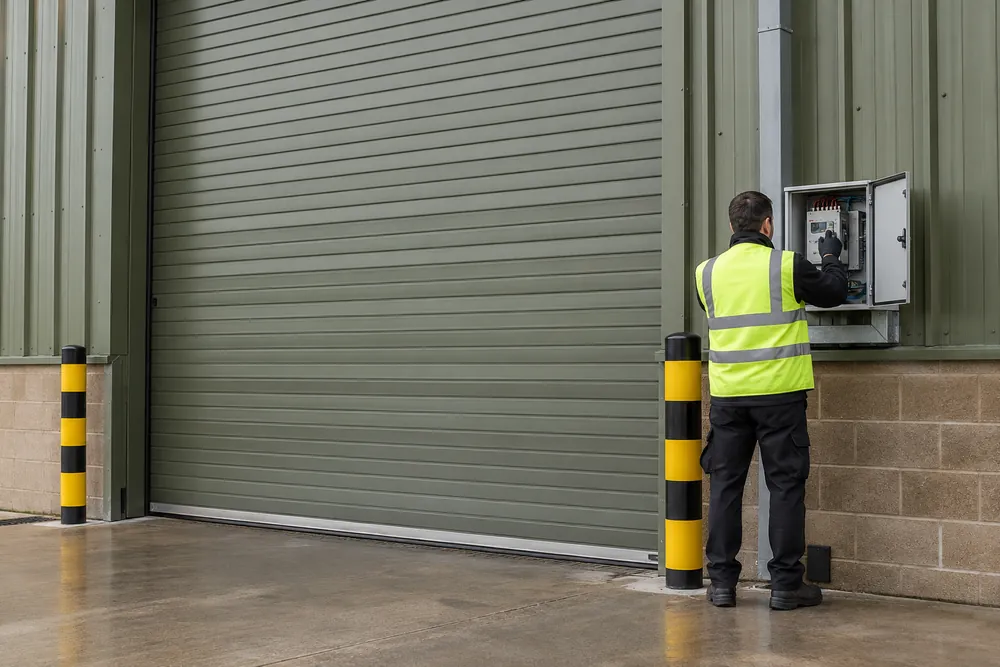
The exact checklist depends on the door design and the manufacturer instructions. Relevant items can include curtain or panel condition, guides, tracks, supports, seals, fixings and the drive arrangement. Cables, springs and other loaded components need the appropriate inspection by a competent person.
Controls and protective devices need checks that suit the complete installation. Cleaning a sensor is not a substitute for verifying that the protective function works. Where a test requires specialist equipment or a particular procedure, the record should state what was done and the result.
Lubrication and adjustment must follow the requirements for the installed product. Applying grease indiscriminately can attract contamination or affect components that should run dry. Any replacement part needs to be compatible with the assembly and its operating loads.
Make Findings Actionable
A maintenance report should identify each asset, the checks completed, defects found and the recommended action. Separate faults that prevent safe operation from planned improvements and observations. The responsible site contact should understand any restriction before the visiting specialist leaves.
If a door cannot be left safe, keeping it available for occasional use is not an acceptable default. It may need isolation and a physical means of preventing access to the hazard. Temporary arrangements should be explained and recorded, with responsibility for the next action agreed.
Keep service records alongside operating instructions and repair history. They help future inspections focus on recurring wear and support informed replacement decisions. A maintenance visit is a record of findings at that time, not a guarantee that a door will remain fault-free until the next visit.
Planning Visits And Comparing Costs
The number and type of doors, access height, isolation arrangements and the depth of testing affect cost. Loading bay pits, restricted production areas and multiple shifts can change the working method. Ask whether remedial parts and repairs are included or quoted separately after inspection.
Group assets sensibly without compromising access or the time needed for checks. Have keys, isolation information and a site contact available, and plan another route for deliveries where necessary. Tell us which doors affect the continuity of your operation so the visit can be organised around realistic constraints.
For an existing breakdown, use the shutter repair enquiry route rather than waiting for a routine service. If repeated defects point towards replacement, compare roller shutters and sectional overhead doors against the current needs of the building.
- List the assets and agree access and isolation arrangements.
- Set inspection scope using product instructions and operating risks.
- Carry out checks and record defects against each asset reference.
- Explain restrictions, agree remedial actions and review the next interval.
Safety And Your Responsibilities
The Provision and Use of Work Equipment Regulations 1998 (PUWER) and the Workplace (Health, Safety and Welfare) Regulations 1992 are relevant to commercial door management. The dutyholder should establish what applies to the equipment and keep appropriate inspection and maintenance arrangements. See HSE work equipment guidance.
BS EN 12453:2017+A1:2021 addresses safety in use of power-operated doors. It informs specification and assessment, rather than replacing a site risk assessment or acting as an accreditation. Ask the proposed installer how the protective measures and testing relate to your door and its users.
Your Questions Answered
Is An Annual Door Service Always Enough?
An annual door service is not automatically enough for every commercial installation. Maintenance frequency should follow manufacturer guidance and a risk assessment that considers operating cycles, environment and defect history. Busy or exposed doors may need more frequent attention, while operator checks between visits remain a separate part of managing the equipment safely.
What Should A Door Maintenance Record Include?
A door maintenance record should identify the asset, inspection date, work completed, test results and defects requiring action. It should also record any restriction on use and the recommended next steps. Keep the report with the operating instructions and repair history so future inspections can follow recurring problems and changes to the installation.